
How Do Freight Carriers Ensure Safety During Transport in Baltimore?

Baltimore is one of the East Coast's most active freight corridors home to the Port of Baltimore, Interstate 95, and a dense network of last-mile delivery routes that feed the entire Mid-Atlantic region. Every day, thousands of truckloads move through the city, and the margin for error is thin. A single safety lapse — unsecured cargo, a fatigued driver, a missed inspection can mean delayed shipments, damaged goods, regulatory fines, or worse.
For shippers and supply chain managers, choosing a carrier that takes safety seriously isn't just good practice. It's a business requirement. This guide breaks down exactly how freight carriers ensure safe transport in Baltimore and what to look for when evaluating your partners.
Key Safety Standards Freight Carriers Must Follow
Reputable freight carriers operating in Maryland comply with a layered set of federal, state, and program-specific safety requirements. Here's what those look like in practice:
1. FMCSA Compliance The Federal Motor Carrier Safety Administration (FMCSA) sets the foundational rules for all commercial carriers. This includes Hours of Service (HOS) regulations that limit how long drivers can operate without rest, electronic logging device (ELD) mandates, vehicle inspection requirements, and drug and alcohol testing programs. A carrier's FMCSA Safety Rating — "Satisfactory," "Conditional," or "Unsatisfactory" is publicly searchable and tells you everything about their compliance history.
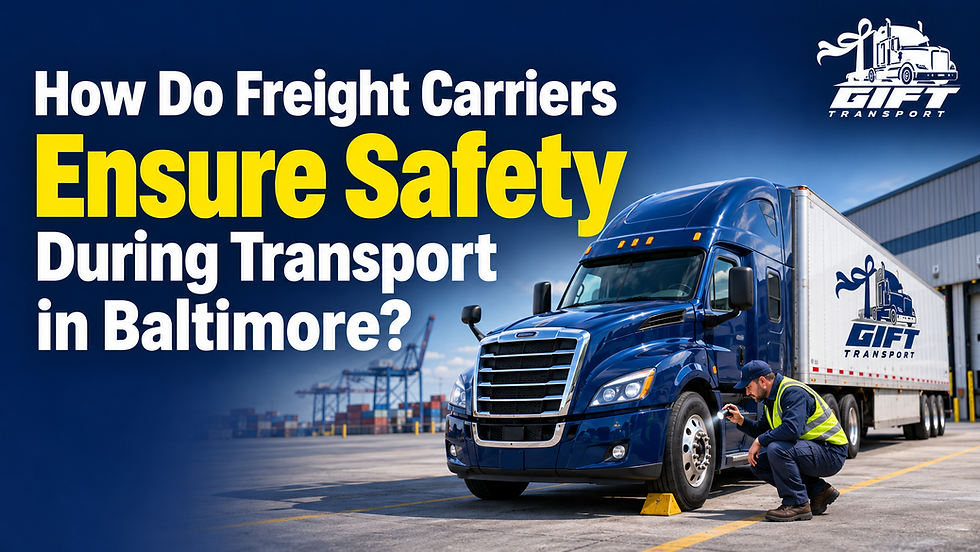
2. Regular Vehicle Maintenance and Pre-Trip Inspections Carriers are required by law to conduct pre-trip and post-trip vehicle inspections before and after every haul. Brakes, tires, lights, mirrors, coupling devices, and load securement systems must all be checked and documented. Best-in-class carriers go beyond the legal minimum by maintaining scheduled preventive maintenance programs that keep vehicles in peak condition year-round.
3. Driver Qualification and Training A safe carrier vets its drivers thoroughly. This means verifying CDL licensing, conducting background checks, reviewing driving records, and ensuring drivers complete ongoing safety training. FMCSA-mandated Entry Level Driver Training (ELDT) standards, in effect since 2022, now require new CDL applicants to complete structured behind-the-wheel and theory training before licensing.
4. Cargo Securement Standards Under FMCSA regulations (49 CFR Part 393), carriers must properly secure every load using rated tie-downs, blocking, and bracing. Cargo that shifts or spills in transit is a leading cause of highway accidents. The number and strength of tie-downs required depends on the weight, size, and type of freight — and any certified carrier should know these rules by rote.
5. Real-Time Fleet Tracking Modern safety-focused carriers use GPS tracking and telematics to monitor driver behavior, location, speed, and vehicle health in real time. This allows dispatchers to intervene early if a driver is speeding, hard-braking, or operating outside approved routes — and gives shippers visibility into where their freight is at any moment.
How GIFT Transport Prioritizes Safety on Every Route
GIFT Transport Inc. is a Baltimore-based, veteran-owned freight carrier and certified Amazon Freight Partner and Amazon's AFP program sets some of the strictest carrier safety and performance standards in the industry. Meeting those standards isn't optional. It's the baseline for staying certified.
Here's how GIFT Transport delivers freight safely across Maryland and the Mid-Atlantic:
Veteran leadership culture — Founded by Randall Monfiston, a retired U.S. Navy Chief Warrant Officer 3 with 21 years of military service, GIFT Transport operates with the precision and accountability that military logistics demands. Safety isn't a policy at GIFT — it's a cultural standard.
Fully compliant CDL driver team — Every GIFT Transport driver holds a valid commercial driver's license and passes rigorous background screening, driving record checks, and DOT drug and alcohol testing before getting behind the wheel.
Amazon AFP performance standards — As a certified Amazon Freight Partner, GIFT is held to Amazon's carrier performance metrics, which include on-time delivery rates, safety incident tracking, and compliance with Amazon's network-specific load and route requirements.
FMCSA-registered operations — GIFT Transport is a fully registered FMCSA carrier, which means federal compliance is built into every dispatch, not an afterthought.
Service-disabled veteran-owned small business (SDVOSB) — GIFT holds SDVOSB and MBE (Minority Business Enterprise) certifications, reflecting a commitment to accountability at every level of the business.
For shippers moving freight through Baltimore, GIFT Transport offers the rare combination of military-grade operational discipline and the performance backing of one of the world's largest logistics networks.
Baltimore-Specific Freight Safety Regulations You Should Know
Operating in Baltimore adds a layer of city and state-level requirements on top of federal standards. Carriers unfamiliar with these rules create risk for themselves and for the shippers who hire them.
Maryland Motor Vehicle Administration (MVA) regulations — Commercial vehicles operating in Maryland must comply with state-specific weight and size limits. Overweight or oversized loads require special permits from the Maryland State Highway Administration (SHA), and violations can result in fines or load seizure.
Baltimore City truck routes — Baltimore has designated commercial truck routes that restrict heavy vehicles from certain residential and bridge-restricted roads. Local carriers who know these routes avoid violations and deliver faster than out-of-state carriers navigating blindly.
Port of Baltimore access requirements — Carriers hauling to or from the Port of Baltimore must follow TWIC (Transportation Worker Identification Credential) requirements for access to secure port areas and comply with port-specific scheduling and drayage protocols.
MDOT SHA bridge and weight restrictions — Maryland's bridge weight postings are enforced, and carriers running overloaded vehicles risk not only fines but infrastructure damage liability. A locally experienced carrier knows which routes to take and which to avoid.
Working with a Baltimore-based carrier like GIFT Transport means you're working with a team that navigates these regulations every day — not one learning them on your dime.
Why Choosing a Safety-First Carrier Protects Your Business
Freight safety isn't just about avoiding accidents it directly affects your bottom line. Here's what's at stake when you choose a carrier without a strong safety culture:
Cargo damage claims — Improperly secured freight leads to damage in transit. A carrier with sloppy securement practices will cost you in claims, replacement inventory, and customer trust.
Delivery delays — Hours of Service violations or failed roadside inspections can pull a driver and truck out of service mid-route. That means your freight sits until a replacement is dispatched — sometimes hours, sometimes overnight.
Liability exposure — If a carrier's negligence causes an accident involving your freight, you may face shared liability depending on your contract terms. A carrier with a poor FMCSA safety record is a legal risk, not just an operational one.
Amazon network performance — For companies shipping through Amazon's fulfillment network, using a certified Amazon Freight Partner is the safest choice. AFP carriers are vetted and continuously monitored by Amazon — which means they're accountable to more than just you.
The cheapest freight quote is rarely the safest one. When evaluating carriers for Baltimore routes, request their FMCSA safety rating, ask about their driver qualification process, and confirm they carry adequate cargo and liability insurance. A carrier that volunteers this information without hesitation is one you can trust.
Frequently Asked Questions
What is an FMCSA Safety Rating and how do I check a carrier's rating?
The FMCSA assigns Safety Ratings of Satisfactory, Conditional, or Unsatisfactory to motor carriers based on compliance investigations. You can look up any carrier's rating at the FMCSA's Safety Measurement System (SMS) at safer.fmcsa.dot.gov using the carrier's DOT number. Always check this before signing a freight contract.
Does GIFT Transport operate under FMCSA compliance?
Yes. GIFT Transport Inc. is a fully registered FMCSA motor carrier operating in full compliance with federal Hours of Service, ELD, vehicle inspection, and driver qualification regulations. As a certified Amazon Freight Partner, GIFT is also subject to Amazon's carrier performance and safety monitoring standards.
What states does GIFT Transport serve?
GIFT Transport serves Maryland, Virginia, Pennsylvania, Delaware, New Jersey, and surrounding Mid-Atlantic states. The company is based in Baltimore and specializes in Amazon middle-mile and freight transport throughout the region.
How does GIFT Transport handle cargo damage claims?
GIFT Transport carries full cargo insurance and operates with strict load securement protocols on every haul. In the event of a cargo issue, GIFT's team is reachable directly and works to resolve claims promptly. Freight documentation and chain-of-custody records are maintained for every load.
What certifications does GIFT Transport hold?
GIFT Transport is a certified Amazon Freight Partner (AFP), a Service-Disabled Veteran-Owned Small Business (SDVOSB), and holds Minority Business Enterprise (MBE) certification. The company is founded and led by Randall Monfiston, a retired U.S. Navy Chief Warrant Officer 3 with 21 years of service.
How can I get a freight quote from GIFT Transport?
You can request a freight quote directly through the GIFT Transport website or by calling the company. GIFT serves shippers, logistics managers, and businesses throughout the Baltimore-Washington corridor and Mid-Atlantic region.
Partner With a Carrier You Can Trust
Freight safety in Baltimore starts with choosing the right carrier. GIFT Transport Inc. brings military discipline, Amazon-certified performance standards, and deep familiarity with Maryland's freight regulations to every load we haul.
Whether you're a shipper looking for a reliable Mid-Atlantic freight partner or a CDL driver seeking a safety-focused employer, GIFT Transport is built for you.
Ready to get started? Visit gifttransport.com to request a quote or learn about open CDL driver positions. Baltimore's most trusted freight partner is one call away.
Comments